Lab-Grown Diamonds: The Part Most Buyers Miss
Lab-Grown Diamonds: When Desire Outpaces Value
Most people researching lab-grown diamonds start with the wrong question.
They ask: are they real?
The more useful question is: what are you actually buying, and does it serve what you want from this purchase?
The answer depends entirely on your priorities, and most buyers don't fully understand their own priorities until they've already made a decision. That's where the expensive mistakes happen.
Lab-grown diamonds are chemically and structurally identical to natural diamonds. They are graded by the same institutions, set by the same jewellers, and worn without distinction. But identical in appearance does not mean identical in every way that matters. Origin, production, market dynamics, and long-term value all tell a more complicated story, one that rarely gets told clearly, because most people selling diamonds have a stake in which direction you go.
What follows is an honest account of what actually separates lab-grown from natural diamonds, and what that means for someone buying an engagement ring or significant piece of fine jewellery.
What a lab-grown diamond actually is
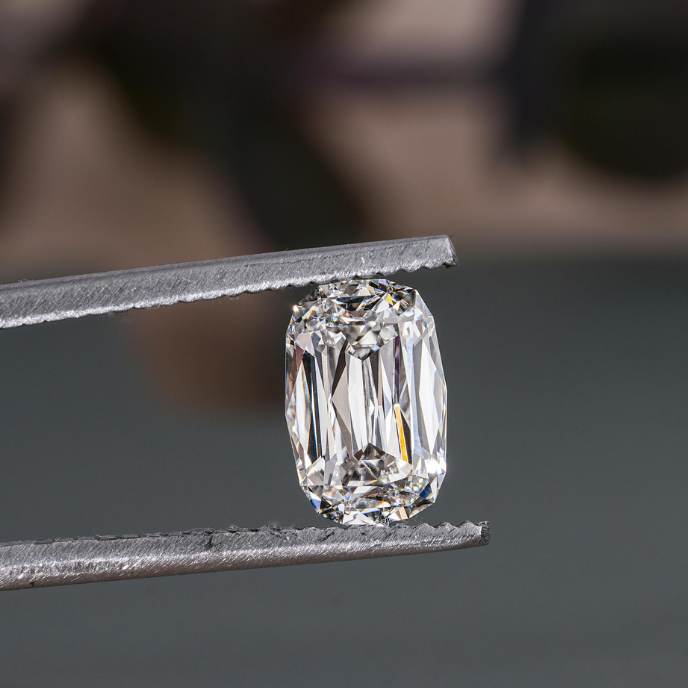
A lab-grown diamond is, chemically and structurally, the same as a natural diamond. Both are formed from carbon, both crystallise in the same way, and both are graded using the same standards. Visually, there is no meaningful difference to the naked eye.
Where they differ is origin.
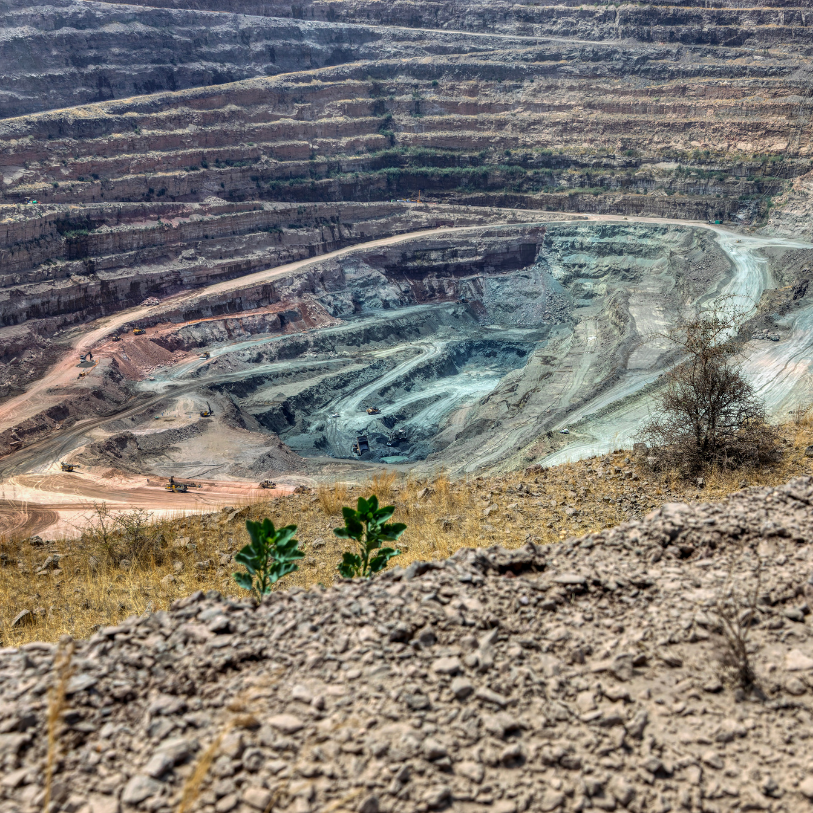
Natural diamonds are formed over billions of years under specific geological conditions. Lab-grown diamonds are created in controlled environments, using advanced technology to replicate those conditions in a matter of weeks.
That distinction might seem philosophical, but it has very real implications when it comes to value.
Ethics, transparency, and what's often overlooked
Lab-grown diamonds are often positioned as the more ethical and sustainable choice. On the surface, that argument is easy to understand. They are created without the need for mining. But the reality is more nuanced.
The natural diamond industry has, over time, introduced frameworks designed to improve accountability. The Kimberley Process Certification Scheme was established to prevent the trade of conflict diamonds, and organisations such as the Responsible Jewellery Council set standards for responsible sourcing, labour practices, and environmental impact. Many established luxury brands operate within these frameworks.
That does not mean the industry is without criticism. But it does mean that traceability and ethical sourcing have become a central part of how natural diamonds are brought to market.
Full traceability, however, remains complex. Most certification focuses on verifying that diamonds are conflict-free and responsibly traded, rather than documenting a complete journey from mine to finished piece. In practice, even when purchasing from established brands, the exact origin and full supply chain of a diamond is not always visible at an individual level.
Lab-grown diamonds, while avoiding traditional mining, are not inherently impact-free. Their production is energy-intensive, and depending on how and where they are created, can carry a significant carbon footprint. As with natural diamonds, transparency varies between producers.
In both cases, the key factor is not simply origin, but how clearly that origin is understood and disclosed.
Certification and what you'll actually see
Any reputable diamond, lab-grown or natural, should come with certification from a recognised body such as the Gemological Institute of America. A GIA certificate will always clearly state if a diamond is lab-grown, labelled as "Laboratory-Grown" and often including details about the growth method.
Under 10x magnification, the standard used in grading, there can be subtle differences in internal characteristics. Lab-grown diamonds are more likely to show metallic inclusions, more linear growth patterns, and pinpoint inclusions in specific formations. Natural diamonds tend to show more irregular, organic characteristics formed during geological growth.
None of this is visible when worn. But it reinforces an important point: they are not identical in origin or formation, even if they appear identical on the finger.
Price vs value
This is where the distinction becomes most practical.
Lab-grown diamonds are significantly less expensive upfront, in many cases, 60–80% less than a comparable natural diamond. For buyers prioritising size and visual impact within a specific budget, the appeal is obvious.
But resale tells a different story.
Natural diamonds have an established secondary market. They don't typically resell for what you paid, but they retain a portion of their value because supply is finite. Lab-grown diamonds are produced at scale, and as production increases, prices continue to fall. At resale, this often translates to minimal recovery of value, in many cases, losses in the region of 80–90% or more.
That doesn't make them a poor choice. It simply places them in a different category of purchase, one where the value is in the wearing, not the holding.
Rarity, and why it still matters
Natural diamonds are often described as rare, sometimes to the point where it sounds like marketing. But in context, they are.
Not every diamond mined is of gem quality. Fewer still meet the standards required for fine jewellery. And within that category, certain combinations of size, colour, and clarity are genuinely scarce.
Lab-grown diamonds do not operate within those constraints. They can be produced in increasing quantities, with improving consistency. Rarity, in the traditional sense, does not apply in the same way, and rarity, whether consciously acknowledged or not, plays a role in how value is perceived.
The size question
For many buyers, the decision comes down to something simple: you can get a larger diamond for the same budget.
A lab-grown diamond allows for higher carat weight, often with better clarity and colour, at a more accessible price point. A larger stone creates more visual impact and may better align with what the buyer wants.
There is a subtler consideration, though. As lab-grown diamonds become more common, larger stones are increasingly associated with that category. A noticeably large diamond may, in some contexts, lead to the assumption that it is lab-grown, or at the very least, not rare. That does not diminish its appearance, but it can influence perception.
So, are lab-grown diamonds worth it?
For some buyers, absolutely. For others, the trade-offs matter more than the savings. The difficulty is that most of the information available online is written by retailers with inventory to move in one direction or the other.
The questions worth sitting with before you decide:
Are you buying for the present, or does long-term value matter to you?
Is visual impact your priority, or is rarity part of what makes this purchase meaningful?
Do you fully understand what you're comparing. Not just on paper, but in terms of how it will look, wear, and be perceived over time?
These aren't questions with universal answers. But they are questions that deserve more than a product page.
If you're navigating this decision and want guidance that isn't tied to a particular sale, the Fine Jewellery Circle's Engagement Ring & Diamond Buying Guide walks through the full picture: cut quality, certification, what retailers don't tell you, and how to approach this as an informed buyer rather than a hopeful one. And if you'd prefer to talk it through directly, independent advisory bookings are available via the website.
The right diamond isn't the most expensive one, or the largest one, or even the most ethical one by someone else's definition. It's the one chosen with a clear understanding of what you're getting and why.