Diamond Certificates: Necessary, But Not Enough
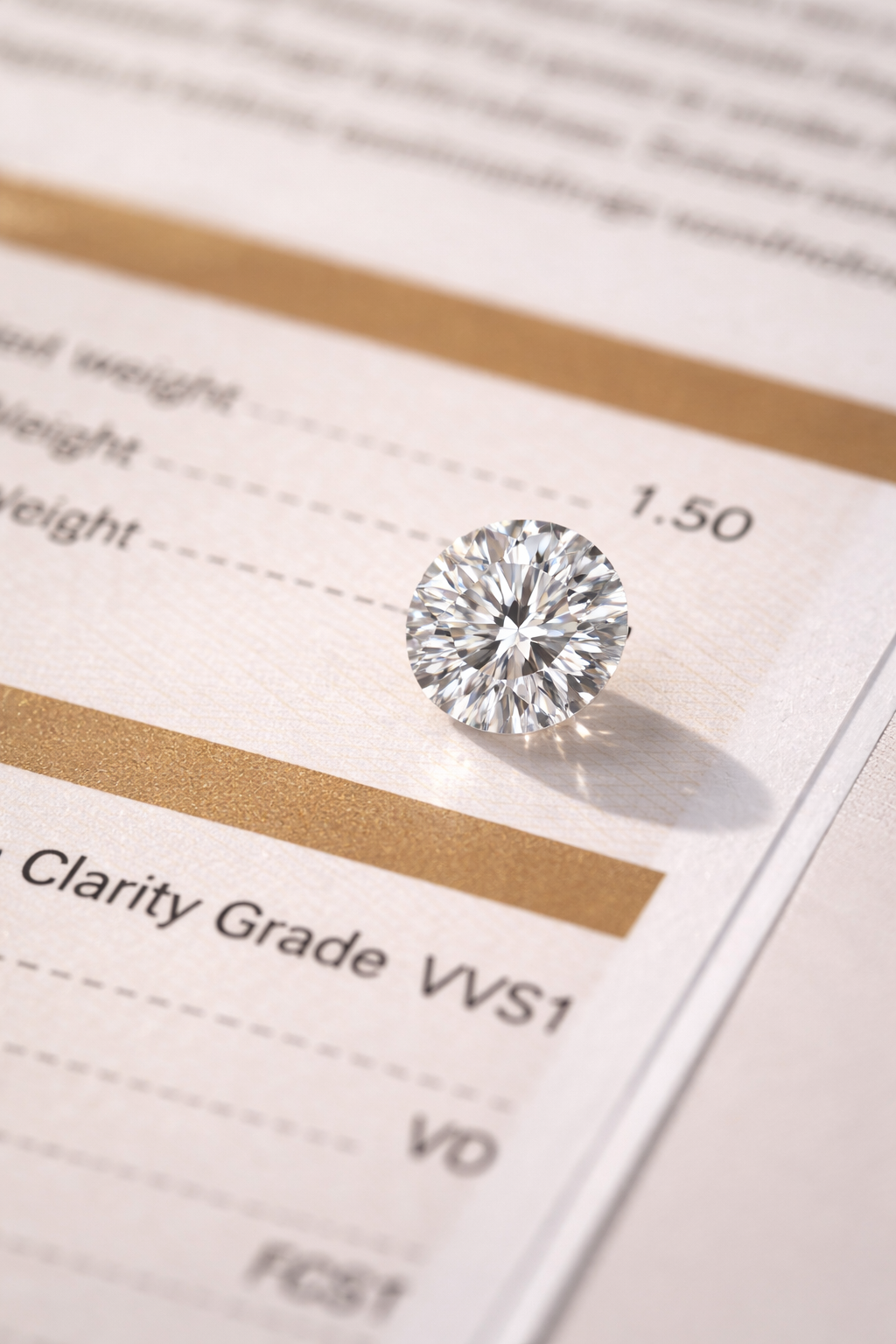
A GIA grading report, the industry benchmark for diamond certification.
A certificate is not a guarantee. What it tells you, what it doesn't, and how to use one properly. The conversation you'll only have with someone who truly knows their trade.
The Misconception Most Buyers Carry Into a Jeweller
Walk into almost any jeweller, ask about a diamond, and a certificate will appear at some point in the conversation. It arrives with quiet authority and most buyers treat it like a passport. They assume that having a certificate that outlines high quality 4Cs guarantees the quality of the stone. This is a fair assumption to make, seeing as certificates (especially those issued by a reputable grading authority such as the GIA), look official, and the industry has done little to complicate that impression. The thing most buyers don’t realise is that a grading report is an opinion, not a verdict. It’s an expert opinion, issued by a trained gemologist at a specific laboratory, on a specific day. It genuinely is valuable but it is not a guarantee of beauty, quality, or value. Depending on who issued it, it may not even be particularly accurate.
Understanding what a certificate actually is, and what it isn't, is one of the most useful things you can do before buying a diamond.
What a Certificate Actually Tells You
A grading report documents the characteristics of a diamond according to the 4Cs: Cut, Colour, Clarity, and Carat Weight. It may also include information on fluorescence, proportions, symmetry, and polish. A detailed report from a reputable lab will map inclusions on a diagram and note the stone's measurements to fractions of a millimetre.
What it does not tell you is whether the diamond is beautiful. It cannot capture the way light moves through a stone, the warmth it has in candlelight, or the way it performs in the setting you've chosen. These things are real, but they exist entirely outside the report.
Grading is also not perfectly objective. Two experienced gemologists examining the same stone can arrive at slightly different conclusions on colour or clarity. Labs set out to minimise this variance, but it cannot be eliminated entirely. This isn't a flaw in the system; it's the nature of assessing a natural material. What it means in practice is that the grade on a certificate is a reference point, not an absolute truth.
A certificate documents a diamond. It does not define it. The most exceptional stones earn their reputation in person, not on paper.
Not All Labs Are Equal - and the Gap Is Significant
This is the part the industry is least keen to discuss openly. Multiple laboratories issue grading reports, and their standards differ - sometimes considerably. The same diamond submitted to two different labs can receive different grades. That difference translates directly into price.
A stone graded G/VS1 by a stricter lab might receive F/VVS2 from a more lenient one appearing superior on paper while being identical in the hand. If you're paying a premium based on that grade, you may be paying for a certificate, not a diamond.
Here is an honest assessment of the main labs:
GIA: Gemological Institute of America
The benchmark. Use this as your reference point.
GIA created the 4Cs grading system and remains the most respected authority worldwide. Their standards are rigorous, their consistency is high, and their reports are widely understood across the global trade. When evaluating any diamond, GIA is the baseline against which everything else is measured.
HRD Antwerp: Hoge Raad voor Diamant
Credible. Comparable to GIA for European stones.
HRD is Europe's leading laboratory and is generally considered to operate at a similar standard to GIA. You will encounter HRD reports frequently in the UK and across Europe, and they are worthy of confidence. Some within the trade consider HRD marginally more lenient on colour than GIA, but the difference is modest.
AGS: American Gem Society
Worth knowing - now part of GIA.
AGS was notable for pioneering cut grading and light performance analysis, taking a more scientific approach to evaluating how a diamond handles light. In 2022, AGS integrated into GIA, a meaningful development that effectively consolidated the industry's two most rigorous authorities. If you encounter an older AGS report, it is credible.
IGI: International Gemological Institute
Widely used, but approach with context.
IGI is popular with high-street chains and widely used for lab-grown diamonds. Their grading is considered less stringent than GIA, not dramatically so, but enough to matter when comparing prices. An IGI-graded diamond and a GIA-graded diamond with identical grades on paper are not necessarily identical stones. If you're considering an IGI-certified stone, factor this in.
EGL: European Gemological Laboratory
Carries less weight in the luxury market.
EGL has faced consistent criticism within the trade for softer grading standards. An EGL certificate showing a particular grade should not be treated as equivalent to the same grade from GIA. In the luxury market, EGL reports carry little weight. If you encounter one, seek an independent second opinion before proceeding.
Branded Certificates (e.g. Tiffany & Co.)
A different category entirely.
Some heritage maisons grade diamonds entirely in-house, claiming standards that exceed those of external laboratories. Tiffany & Co. is the most prominent example. Their certificates are proprietary, issued exclusively to their clients and not transferable to the wider market in any meaningful way. Whether you place confidence in a branded certificate depends largely on the confidence you have in the maison itself. This is a legitimate approach at that level, but it does mean independent verification is impossible.
High Street vs Heritage: A Distinction Worth Making
Not all jewellers approach certification in the same way, and understanding the difference tells you something important about who you're buying from.
Many high-street chains place greater emphasis on their own marketing language than on independent grading. Terms like 'premium cut' or proprietary quality descriptors are not standardised and cannot be compared across retailers. They exist to create a sense of exclusivity without the transparency that independent certification provides. This is not necessarily dishonest but it does make objective comparison harder, and it places significant trust in the retailer's own claims.
Heritage maisons operate differently. At the top end of the market, it is common practice not to certify smaller accent diamonds, the stones used as side settings or pavé work. This is not a red flag. At those sizes, the differences between grades are imperceptible to the naked eye, and the cost of certifying each stone individually would be disproportionate. What matters at that level is the maison's own quality standards, which are typically rigorous and consistently applied.
The absence of a certificate is not always the absence of quality. At the highest levels of the market, reputation and craftsmanship speak more clearly than paperwork.
What a Certificate Cannot Tell You
This deserves its own section because it is so consistently overlooked.
A grading report can tell you that a diamond is graded D colour and VVS1 clarity. It cannot tell you whether it is a beautiful diamond. Cut quality (the proportions, symmetry, and polish) that determine how light moves through a stone has a greater impact on visual appearance than almost any other factor. A technically well-graded diamond with poor light performance can look flat and lifeless. A stone with slightly lower grades but exceptional cut can be breathtaking.
The certificate captures data. It does not capture beauty. No report will tell you how a diamond looks in the setting you have in mind, how it performs in the lighting conditions of your life, or how it feels when you see it in person for the first time. These are the things that make an exceptional diamond exceptional, and they are only discoverable in person.
This is why the certificate should always support your own judgment, never replace it.
How to Use a Certificate Properly
A grading report is a tool, not a verdict. Used well, it protects you and provides a framework for comparison. Here is how to approach one:
First, check the issuing laboratory before reading anything else. A G/VS1 from GIA and a G/VS1 from EGL are not the same thing. Establish who graded the stone before you assess what they said about it.
Second, use the grades as a guide, not a hierarchy. The goal is not to find the highest grades. It is to find the right combination of characteristics for your priorities and budget. A D colour diamond with poor cut proportions will not outperform an F colour diamond with excellent cut. Grades should inform your decision, not make it for you.
Third, pay attention to how the jeweller presents the certificate. A knowledgeable, confident jeweller should be able to explain what each grade means in the context of this particular stone: why this clarity grade was chosen, how the cut proportions affect light performance, what the fluorescence means in practice. Hesitation, deflection, or a heavy reliance on the document itself tells you something. So does fluency.
The certificate tells you what a diamond is on paper. The jeweller's confidence in explaining it tells you whether they truly understand what they're selling.
Finally, remember that a certificate from a reputable laboratory does not increase a diamond's intrinsic value. What it does is provide market confidence, assurance that you are paying for what the stone actually is, not what it is claimed to be. In a market where opacity is common, that’s important.
The Bottom Line
A certificate is not a shortcut to a good diamond. It is one piece of information among several - important, worth understanding, and worth checking. The lab matters. The grades matter in context. And what the certificate cannot capture - light, beauty, craftsmanship - matters most of all.
The buyers who make the best decisions are the ones who use the certificate as a starting point, not an endpoint. They understand what they're reading, they know which labs to trust, and they look beyond the paper to the stone itself.
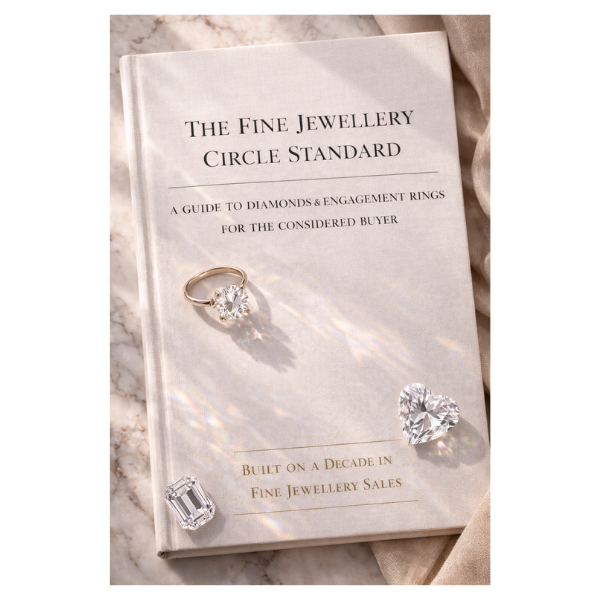
A little knowledge can make a big difference to what you buy.
£15.00 | 47 page digital guide
Buying a diamond shouldn’t require you to become an expert, but understanding what you’re looking at can make all the difference.
Written by a GIA Accredited Jewellery Professional with over a decade of experience in London’s luxury jewellery industry, this independent guide takes you beyond the 4Cs to help you make a more informed purchase.